The DeliverymanIt takes a spine to be a professional yacht delivery skipper. Sometimes it requires sailing at its toughest, the stuff you’re forced to do when the ‘iron spinnaker’ lets out a gasp and breaks down two days into a nine-day stretch at sea. It’s sailing to test your tenacity, with wave trains roaring past as half your crew heaves over the stern.Peter Neaves is among a handful of full-time professional delivery skippers in Australia. The Sydney-based Neaves, 44, has worked as a sailor for about a decade, but he’s been on the water since he was 10, sailing dinghies around Botany Bay.
In recent years, the rugged former sailing instructor has skippered everything from trimarans to powerboats around countries including the Seychelles, Thailand and Tahiti. Neaves once sailed a classic timber ketch and Newport-Bermuda race winner, Holger Danske, from Tahiti to Sydney. He’s also a sought-after sailor and return delivery skipper across the treacherous ‘paddock’ of Bass Strait for Sydney to Hobart races.
Neaves recently sought crew to help deliver a yacht from Darwin to Perth for its UK-based owner. The prospect of a sail through the tropics sounded idyllic and Neaves has a solid reputation in Sydney sailing circles, so I asked to go along.
Two experienced women sailors and I were to accompany Neaves on the Darwin to Broome leg of the trip, after another man cancelled at the last moment. Megan, 34, had helmed catamarans and dinghies since childhood and had sailed offshore between Sydney and Newcastle. Renee, 29, had trimmed headsails on yachts during the Cruising Yacht Club of Australia’s Winter Racing Series. I was a 37-year-old novice graduate of three short courses at the nearby Pacific Sailing School. It was Renee’s and my first offshore run.
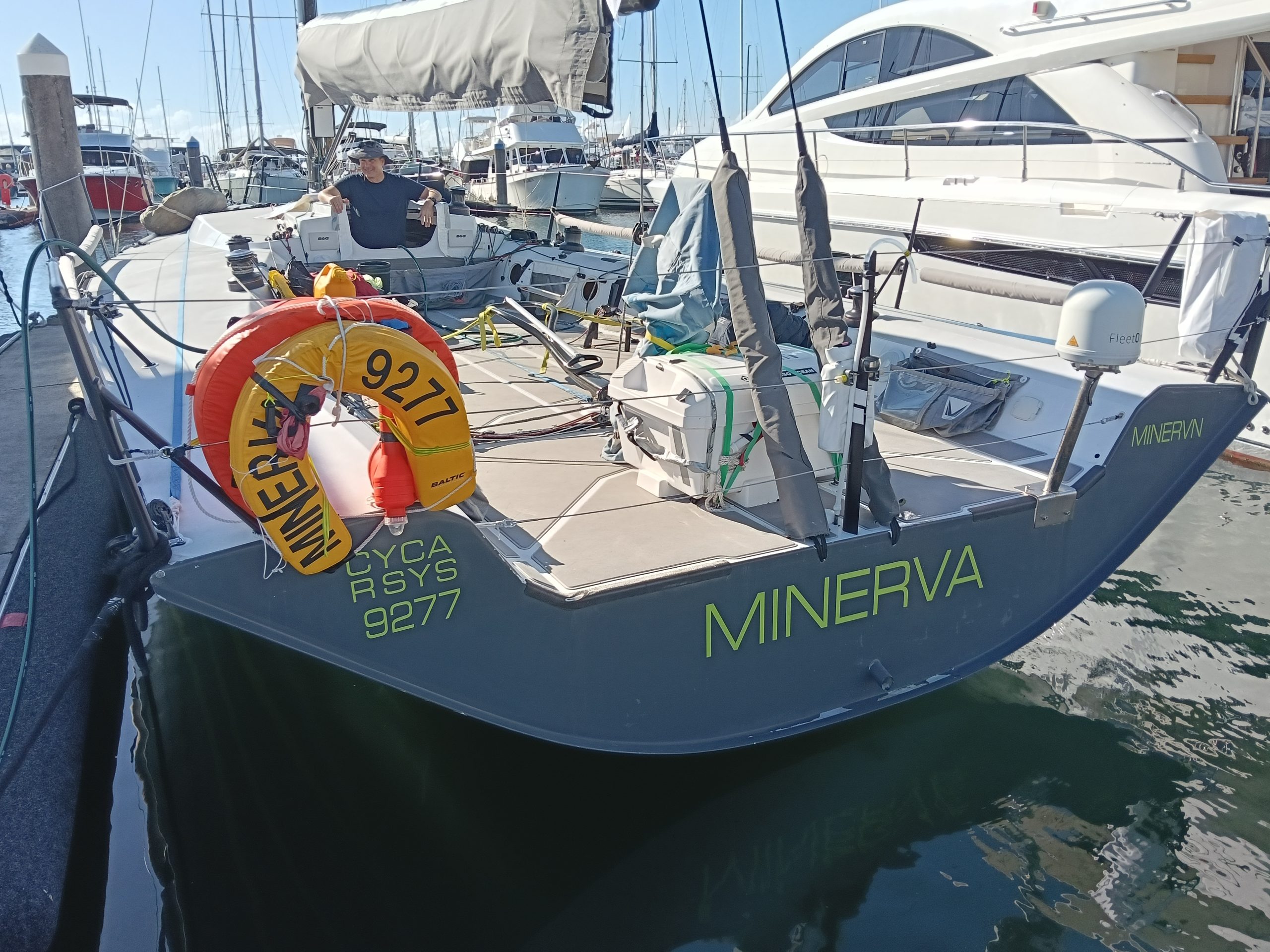
Our delivery yacht was Jucasta, a 38-foot timber Cole sloop. She was about 30 years old, slightly time-scarred and, while sturdy, she was no comfort cruiser by any stretch. Jucasta’sautopilot was broken and there was no shower on board.
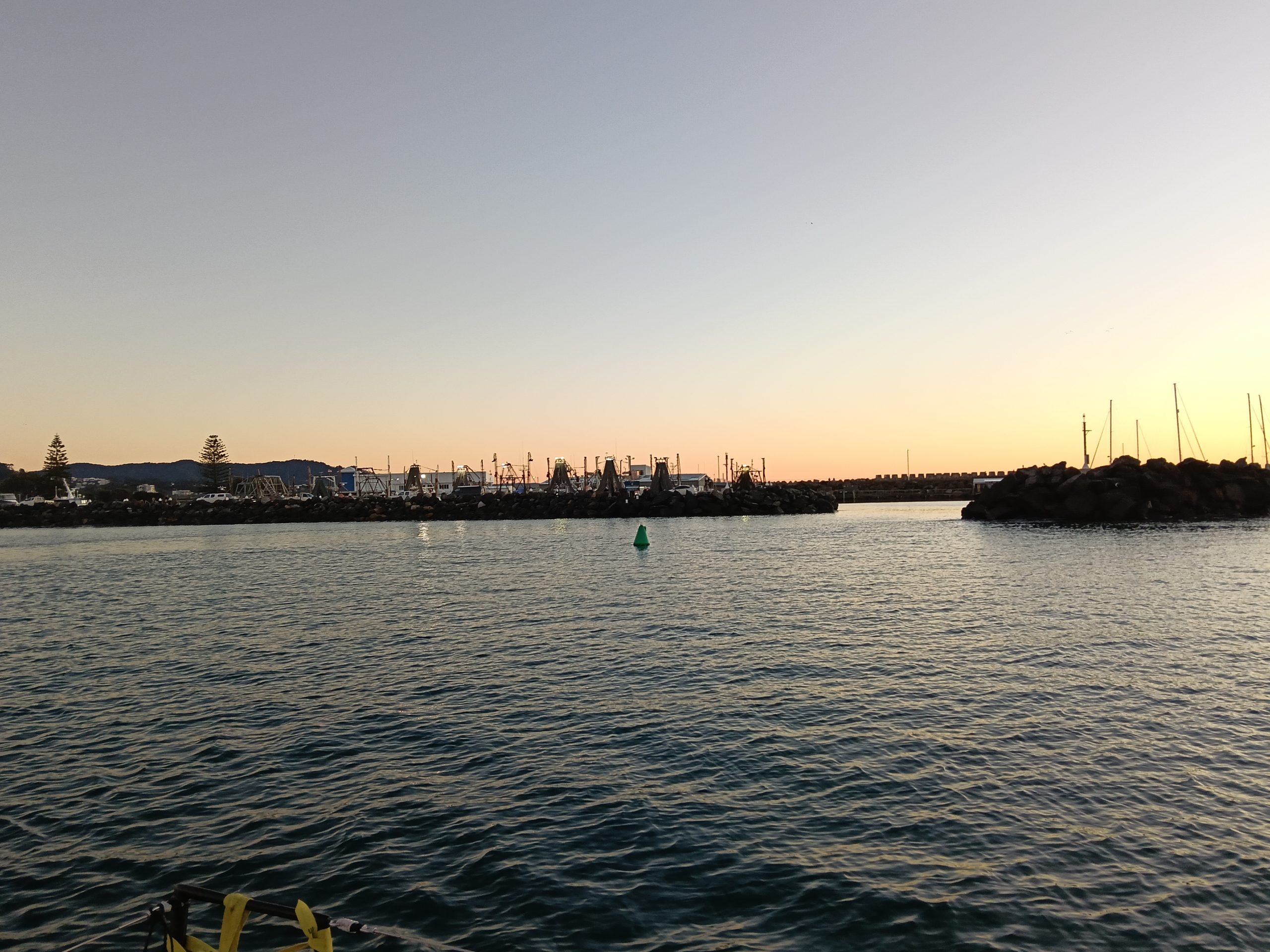
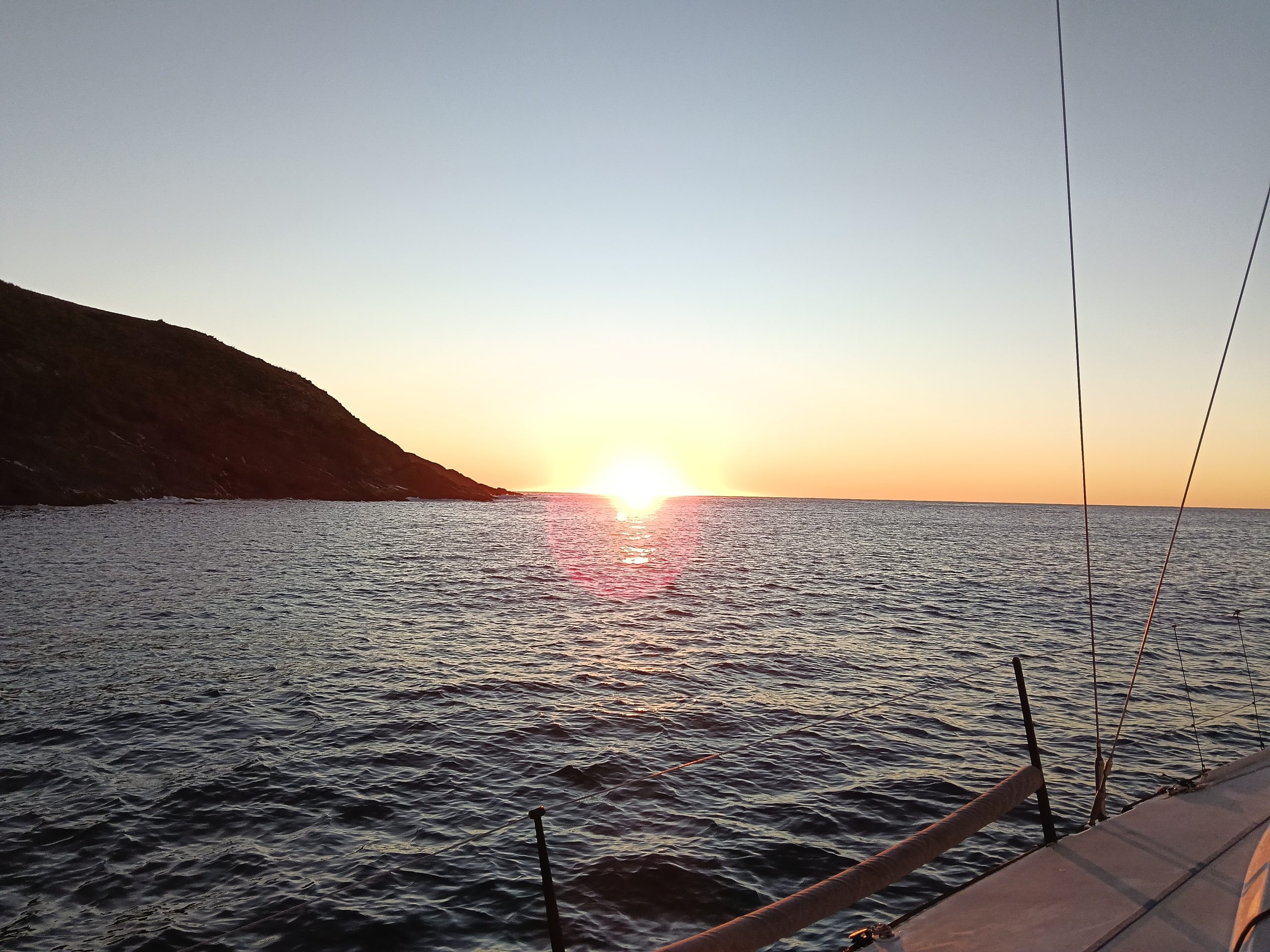
On the first afternoon we sailed from our mooring on Darwin harbour’s Fannie Bay and marvelled at one of the Top End’s iconic sunsets. Spirits were high as we motored out to sea for several hours with the faintest whiffle of breeze.
Neaves set an around-the-clock helming schedule of an hour on, three hours off for everyone: a system he adjusts depending on his crew’s experience and the delivery course. As the ocean transformed into a lilting silver soup, we enjoyed a happy hour of a beer each. Neaves showed us how to use the instruments to follow our course and we began our shifts.
Early the next morning, while crossing Joseph Bonaparte’s Gulf, the weather took a turn. The trade winds which regularly bluster across Australia’s north strengthened to more than 25 knots. Neaves, who’d been expecting some wind from the weather forecast, clambered across the deck with simian agility and reefed the main. The swell had now reached three metres and occasional monstrous waves rose from nowhere, crashing over the bow. “Those are what we call significant waves,” he said, with the humdrum expression of someone who had just shelled a bucket of peas.
At this point, all the colour drained from Renee’s face. She was terrified of taking the helm on her own. “I’m so scared I’ll sink us, I just can’t do it,” she said. Renee then quietly began vomiting over the stern, before retreating downstairs into the saloon. By daylight, as the conditions continued, I also became nauseous, only with far less eloquence. I sputtered over the side in a violent guttural retch. I joined Renee below, while stoic Megan and Neaves continued to take turns at the helm.
Below deck, water steadily dripped into the saloon and onto our beds through cracks in the rubber surrounding the hatches. “Oh, expletive, now we’re sinking,” I thought, but the bilge pump below slurped away solidly. As I staggered to the head to vomit, the craft lurched violently and a couple of unsecured kitchen utensils leapt from their cupboards and clattered across the floor. I somehow reached the toilet in time, and as I threw up, the yacht heeled suddenly to starboard, causing the toilet lid to crash down hard onto the bridge of my nose. I touched my nose and found blood.
By now, we’d been sailing for less than a day, were perhaps 60 nautical miles offshore and the sea that raged above began to slam home the concept of mortality. Kipling once wrote; “That packet of assorted miseries which we call a ship”. Every seafarer sometimes has reason to question their judgment, I thought, but what on earth do we make of those who do this for a living?
Neaves, who has steered the flimsiest craft through the foulest 50-knot squalls, confidently took the helm and then snored loudly on his breaks. He tried to pacify poor Renee; “We’re safe and it’s not as rough up here on deck as it feels below, honestly you’ll feel better if you come up”. He gave me a Phenergon, an antihistamine which provided my first hours’ sleep of the trip, and which, unlike several seasickness pills already taken, worked a treat in no time. Soon I was spotting giant waves while Megan expertly wove the yacht in and out of the swell, surfing the biggest ones. Renee, however, only came up to the cockpit to ask about the nearest port.
Neaves suggested we drop anchor at Cape Talbot, in the Bonaparte archipelago, so we could all get a decent night’s sleep, have a hot meal and dry our mattresses in the following morning’s sun. We sailed into the protected bay and prepared to drop anchor, as the wind petered to almost nothing. Several other yachts were moored there close to shore. While anchoring, Neaves discovered that the motor was damaged. There was a whirring sound, hfft, pfft, then silence. The old diesel engine refused to kick in, so we quickly tacked with the mainsail facing the wind to reverse and secure the anchor.
The next morning, as a government border patrol plane dipped and circled above, radioing ours and the other yachts for course and crew information, a fishing boat motored into the bay. Neaves radioed for help, knowing the boat would have a ice machine on board and that without power, the food in our refrigerator would soon spoil. Would it be possible for them to bring us some ice, please, and in return, we could pay them or give them some food or beer? Neaves was reluctant to go across in our rubber dinghy, as navigational guides of the area warned that crocodiles have been known to prowl the shallows and bite into softer craft.
The Barra-B was a large fishing boat captained by an affable fellow called Robbie McIntosh, who was fishing with his wife, children and a dreadlocked hand in his twenties. With the generosity of spirit often found among mariners, McIntosh and his young hand fired up their aluminium tender to deliver us some enormous chunks of ice. He said they were heading for Wyndham. The temptation of the sturdy boat was too much for Renee and she begged McIntosh for a lift. “I won’t be any trouble,” she said. We tried to convince her to stay on the yacht but her mind had been made up hours before in the swell. McIntosh obliged, and gained an unexpected passenger and some beer for his return voyage.
Neaves then turned his attention to the engine problem. Manual in hand, he and Megan began dismantling, suspecting an oil filter problem, or that water had seeped into the fuel during the rough crossing. But their efforts brought no joy. The static of the radio soon announced that help was near; another yacht owner moored in the bay had heard Neaves radioing the fisherman and knew we had motor problems. John, an earthy former soldier who had been sailing a large steel-hulled yacht around Australia since his retirement, seemed a veritable grease monkey. “There’s not much I don’t know about those old diesels,” he said, and came over to take a look. After several hours’ tinkering, he threw his hands in the air, promising to return in the morning to try another possible solution.The same night, a young couple in a sleek Beneteau Oceanus 39 called Shining Wolf anchored nearby, radioed to ask if they could come across to say hello. Alison and Mathew had taken a year off work to travel north from Perth to Papua New Guinea, hoping to sell their yacht in Queensland on their return voyage. They had brought their German Shepherd along for the earlier part of the trip, staying close to shore for daily walks. As John obligingly returned the next morning to help Neaves with the motor (without success), they collected Megan and I for a walk along a narrow strip of beach furrowed with crocodile tracks. On the return trip, we inspected their yacht, and they mentioned they had a satellite phone. Megan rang her family to learn that her grandmother had died.
Neaves deemed the motor problem irreparable without parts or a mechanic, so there was nothing to do but return to our course as we’d already lost a day-and-a-half. As soon as we left the protection of the bay, we once again found lumpy seas, filled with the relentless white peaks that Megan called galloping horses. Yet just a couple of hours later, the wind vanished and the waves receded to a gentle lapping. We raised goose wings but the sails luffed in the stillness. Megan helped Neaves to chart our course using the GPS, a process they dubbed ‘navaguessing’. She knew we were gaining little ground under the elusive breeze. We still had solar panels powering batteries for our instruments, mast lights and Neaves’ computer but he warned that if it became overcast or the batteries got low, we’d be unable to flush the toilet or use the bilge. In the meantime, we continued helming around the clock on shifts of 90 minutes on, three hours off, sometimes shrouded under fog so thick that it was impossible to tell where the ocean began and ended.
On the day of her grandmother’s funeral, Megan sat on the deck and held her own quiet ceremony, scattering some shells into the ocean, writing a poem and burning it, drinking tea and singing a song, ‘Cockles and Mussels’. “Grandma used to play us that song on the piano,” she said. Shortly afterwards, Megan spotted the first of several whales we saw on the voyage. The days that followed were the best of the trip. We showered on the old teak foredeck behind the headsail in our swimmers using buckets of sea water; a ritual with sunsets providing surely the best bathing view on earth. We cooked delicious meals with meat and vegetables in the tiny galley kitchen, the precious ice lasting for the trip.Neaves also taught us how to tie left and right-handed bowlines and half-hitches and other knots; and on clear nights, we practised celestial navigation, using a pointer of the Southern Cross to find South. When the batteries were well charged we sometimes listened to music, including the American singer and sailor Jimmy Buffet’s nautical offerings, the Cruel Sea’s Deliveryman and Vivaldi’s Four Seasons. Neaves glowed with pleasure whenever he told sailing stories. “I can’t imagine getting an office job again,” he said, briefly discussing another existence as a salesman for a photography company. His relaxed demeanour remained unchanged during the nine days whether on choppy or glassy water. As we ranged the western coast of the continent and headed south, our sails filled with wind and we scooted across the surface like a flying fish. “Now this is sailing,” said Neaves. We were about a day out of Broome when we saw the West’s extraordinary moonrise known as the Stairway to Heaven. The moon slowly climbed from a slither on the horizon and smeared the ocean with shimmering ripples of gold. As for most of our voyage, there were no other craft in sight. Haunting strains of the late cellist Jacqueline DuPres’ Elgar Cello Concerto drifted from the CD player. No-one could speak. I understood at that moment exactly why people like Neaves do what they do.